
FIFA World Cup 2026
The World Cup That Made Me Feel Like a Fan Again
7/18/20265 min read
The World Cup That Made Me Feel Like a Fan Again
As the World Cup prepares for its final act, I'm left with a feeling I hadn't expected to experience.
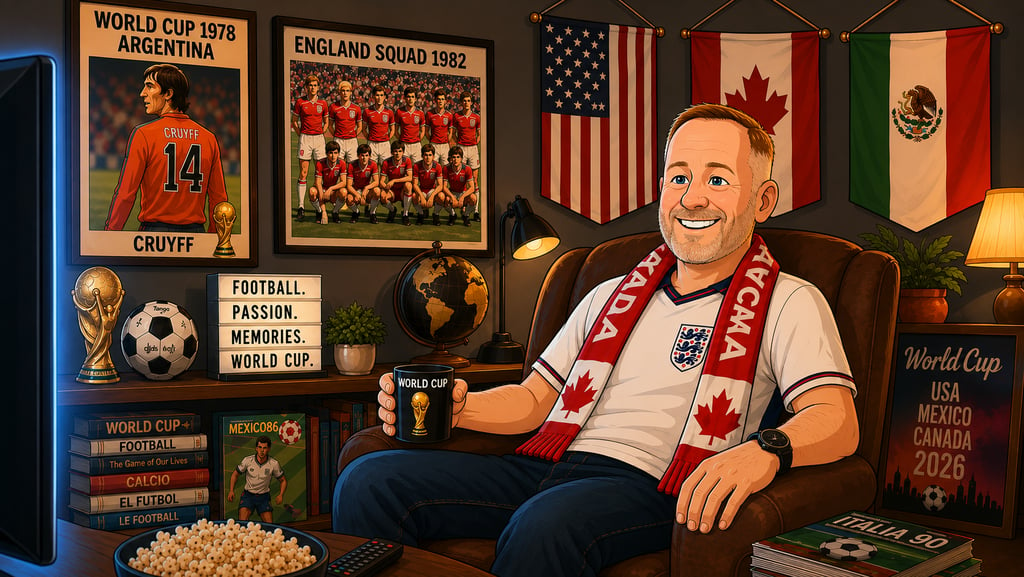
For the first time in a long time, I haven't spent an entire tournament analysing every pass, every tactical tweak or every pressing trigger. Instead, somewhere between the upsets, the controversies and England's inevitable heartbreak, I simply found myself enjoying football again.
That, more than anything else, is what I'll remember.
Credit has to go to the three host nations. The United States, Canada and Mexico have delivered a tournament worthy of football's biggest stage. The stadiums have been magnificent, the crowds have embraced the occasion, and together they've shown that North America is more than capable of hosting football's greatest event. Every venue has felt like an occasion in itself, creating a fitting backdrop for what has largely been a thoroughly entertaining competition.
Before a ball was kicked, however, most of the discussion centred on FIFA's decision to expand the tournament. Like many people, I wasn't convinced, and if I'm honest, I'm still undecided.
There have undoubtedly been positives. More countries have been given the chance to experience the World Cup, more supporters have travelled across the continent, and we've all been treated to stories that probably wouldn't have existed under the old format. Several nations arrived with little expectation and left having earned the respect of the footballing world.
Yet I'm not convinced the new structure has improved the competition as much as some suggest.
When almost three teams from every group qualify for the knockout stages, some of the jeopardy inevitably disappears. Teams have been able to progress without ever really looking convincing, and the final group matches haven't always carried the same tension we've become accustomed to over the years.
More importantly, this is supposed to be the World Cup.
It should showcase the very best international teams on the planet.
While every nation deserves the opportunity to dream, there were occasions when the gulf in quality was impossible to ignore. A handful of teams simply looked out of their depth, and you couldn't help wondering whether some of them would struggle over the course of a season in England's League One.
That's why I'd be very cautious about expanding the competition any further. Bigger isn't always better, and the World Cup should never lose sight of what makes it special in the first place: watching the very best compete against the very best.
If the football has generally been entertaining, FIFA's handling of certain off-field issues has been considerably less impressive.
Nothing highlighted that more than the decision to overturn one of the tournament's red cards after outside pressure mounted. Whether the original decision was right or wrong almost became irrelevant. The bigger issue was perception.
Football's governing body cannot allow itself to appear influenced by the politics of a host nation. Once supporters begin questioning whether disciplinary decisions are being shaped by external pressure rather than football itself, the integrity of the competition starts to suffer.
That is where stronger leadership was needed.
The same applies to the political statements and protests that appeared during the tournament. The World Cup should be the one event where football takes centre stage above everything else. Players and teams represent millions of supporters from every possible background and belief. Turning the biggest football tournament on earth into a political platform helps nobody.
If FIFA believes politics has no place on the pitch, then its regulations need to be enforced consistently and without hesitation. Rules only carry weight if governing bodies are prepared to stand behind them.
Fortunately, once the whistle blew, football usually found a way of stealing the headlines back.
This tournament has reminded us exactly why knockout football is so addictive. Heavyweights have stumbled, favourites have fallen and underdogs have refused to read the script. Every upset has added another chapter to a tournament that has felt refreshingly unpredictable.
No story pleased me more than Canada's.
Having spent several years working in Canadian soccer, I'll admit I watched their journey with a little more emotion than most. I genuinely didn't expect them to reach the latter stages, yet game after game they competed with confidence, discipline and belief. Regardless of where their journey eventually ended, they've done an enormous amount for the reputation of Canadian men's soccer, and the foundations they've built should serve them well for years to come.
England's story was rather different.
I'll happily admit that before the tournament started, I wasn't convinced this squad had enough quality to challenge. Injuries had taken their toll, several players arrived out of form or unfit, and compared with previous tournaments, it felt like one of England's weaker squads.
And yet they kept on winning, not always convincingly, not always attractively.
But tournament football isn't an artistic competition; it's about surviving and progressing, and England repeatedly found a way. By the time the semi-final against Argentina arrived, I had done something I promised myself I wouldn't do.
I'd started believing.
When England took the lead, every familiar emotion returned. Maybe this time would be different. Maybe this really was the year everything finally came together.
Then came the tactical changes.
In my opinion, England's approach after taking the lead completely shifted the momentum of the match. Argentina sensed the invitation, altered their tactics brilliantly and took control of a game that had looked to be slipping away from them. Looking back, I believe that tactical decision ultimately cost England a place in the final.
Of course, football has always been wonderfully cruel to managers.
Had the substitutions and tactical adjustments worked, we'd all be praising the manager for seeing the game out and calling him a tactical mastermind. Instead, they failed, and he'll inevitably carry the blame.
That's football!
It's a profession where every decision is judged by the final score, and as disappointed as I was, something struck me after the match.
Normally I'd have spent the evening dissecting formations, analysing player movements and questioning every coaching decision.
This time, I didn't.
I was disappointed because England had lost.... Yes!
Not because my analysis had been proven right or wrong.
Because I was simply a supporter.
Somewhere over the last month, football stopped being work and became fun again.
Now there is only one game left.
By complete chance, Spain landed in my World Cup sweepstake, so they'll have my support in the final. They've been one of the tournament's outstanding teams, playing brave, attacking football that has been a pleasure to watch.
Standing in their way is Argentina, a nation blessed with extraordinary footballers but one that, fairly or unfairly, has once again found itself surrounded by debate throughout this tournament.
Whatever happens, this World Cup has reminded me why billions of us keep coming back every four years.
Not for VAR.
Not for politics.
Not even for tactics.
We come back because football has an unrivalled ability to surprise us, frustrate us, unite us and, every once in a while, make us feel like children again.
For me, that's been the greatest victory of them all.